
Finding the Palo Alto Residents Directory
Start any Palo Alto records hunt from the clue you already hold. An address leads straight to the Santa Clara County Assessor. The same address also works in the City of Palo Alto parcel tools. A name might point to a court case or a recorded instrument. It might also surface a professional license, a business filing, an obituary, or an old street directory entry. And a question about a living person is not the same as one about a past household. Matching the question to the right custodian matters. It keeps an ownership record from being mistaken for proof of residence.
Gaps exist in every official record. A parcel entry names an owner and a tax mailing address. Yet not everyone at the situs appears. Voter rolls stay protected and cannot serve as an open street browser. A library collection can place a listed adult in a given year. An omission there may reflect a move, a non-listing, or a publication gap rather than an absence. Treat each hit as a lead. Find a second, independent record before treating two names as one person.
- Write down the name, address, old place name, or date range that defines the search.
- Use the assessor, GIS viewer, or Palo Alto parcel report to capture the APN and jurisdiction.
- Choose the next custodian: recorder for title, court for a public case, vital records for an eligible copy, or library for historical context.
- Compare two identifiers such as a relative, chronology, legal parcel, occupation, or exact spelling.
- Use a counter visit, mail request, CPRA request, or reference desk when the online path ends.
Followed in order, that path turns a sprawling resident-record question into a trail anyone can check and reproduce.
Palo Alto Resident Records Offices
Palo Alto records divide by function, and each office guards its own slice. The Santa Clara County Clerk-Recorder holds real-property instruments plus vital and business filings. The Assessor supplies the parcel and APN starting point. Municipal records sit with the City Clerk. Planning and Development Services provides parcel reports, permits, and code files. Court records answer to the Santa Clara County Superior Court, not the Clerk-Recorder. State offices round things out. They cover voter status, vital products, licenses, business entities, custody records, and archives.
Santa Clara County Clerk-Recorder
110 West Tasman Drive
San Jose, CA 95134
(408) 299-5688
Official Records research
Santa Clara County Assessor
130 West Tasman Drive
San Jose, CA 95134
(408) 299-5500
Property Address Search
California Elections Office
Statewide status service
Santa Clara County voter data route
Use the official request form
My Voter Status
Hours matter when planning a visit. The Recorder's Business Division welcomes the public Monday through Friday, 8:00 a.m. to 4:30 p.m. The Assessor's counter runs Monday through Friday, 8:00 a.m. to 5:00 p.m. Plenty of services move by mail or online instead. These range from copies to marriage and fictitious-business-name filings. For municipal files, use the City of Palo Alto public-records route. Describe the record, date range, department, project, or address you want.
Palo Alto Assessor Starts With APN
The County Assessor's real-property search is the cleanest remote first step for an address. Type in the street number and name. Add a unit when the system accepts one. You can also simply enter an APN as the alternate route. A city filter narrows results to Palo Alto. The parcel card that comes back can carry the situs address, APN, property class, and assessed land and improvement values. It may also show total assessed value, tax-rate area, legal-description cues, the assessment year, and transfer or base-year details where published.
There is no general public owner-name search online. California privacy practice and Government Code section 6254.21 make the address or APN route far more dependable. Keep the situs address and the mailing address separate. The mailing address is where a tax notice goes. It may lie outside Palo Alto entirely. When the two match, that hints at possible owner-occupancy, but it cannot prove who actually lives at the parcel.
| Assessor field | How it helps an address search |
|---|---|
| Street Number | Required for the address route; use the civic number. |
| Street Name | Use the normalized city spelling and try a suffix variation if needed. |
| Unit | Optional condominium or unit detail when recognized. |
| City | Optional narrowing field for Palo Alto. |
| APN | Alternative identifier; preserve digits and hyphens exactly. |
| Search / Reset | Run the query or clear the fields. |
Want a map view? Drop the APN into the county parcel viewer. The parcel geometry, not the postal label, is what bridges you to the right record office.
Current Palo Alto Resident Sources
Think of current Palo Alto resident sources as a set of partial records rather than one master list. Each answers a different question, and none is a complete household roll. The table separates an ownership clue from a public filing, a municipal record, and a historical or voluntary source, so no single result gets overstated.
| Source | What it can establish | Keeper | Access |
|---|---|---|---|
| Parcel and assessment record | APN, situs, values, class, mailing evidence | Santa Clara County Assessor | Address/APN search |
| Recorded-document index | Grantor, grantee, deed, lien, map, and recording facts | County Clerk-Recorder | In-person research |
| City permit or parcel file | Project address, record type, dates, status, and named contacts | Palo Alto Planning and Development Services | Accela or request |
| Voter status or approved data file | Self-status or restricted administrative fields | California SOS / Registrar | Private check or certified purpose |
| Directory, newspaper, or obituary | Historical listing, event, address, and chronology | City Library / PAHA | Online, microfilm, or reference help |
The most direct name-to-record workflow lives on the Palo Alto resident lookup page. For a street, parcel, or old house, give the APN and legal description more weight than a matching name alone.
Santa Clara Deeds at the Counter
Santa Clara County publishes no public remote deed-name index. The Clerk-Recorder's official-records page requires in-person work. Staff will not run a title search for you. Arrive with a name, address, APN, document number, or book and page. Book-and-page retrieval matters most for documents and maps recorded before 1994. Digital Reel and the older physical indexes push the search further. A simple web query cannot reach these records.
A typical index entry shows the recording date, document number or book and page, document type, grantors, grantees, and APN or legal-description cues. An image can be viewed at the office. Remember what each paper means. A deed records a title transfer, not occupancy. A deed of trust reflects financing, and a release marks the end of an interest. Copies and certifications cost extra beyond inspection. Budget 15 to 45 minutes per research session. Come armed with the APN and a written search trail.
Counter tip. Start with the current parcel record, then carry the APN, legal description, and document number to 110 West Tasman Drive. Staff will not perform the chain-of-title search for you.
A deed copy does not always demand a drive to the clerk’s counter. The Clerk-Recorder’s online and mail services lay out how to order recordings and copies remotely. Some requests aim at a whole city or county record. Those follow a different path. The Secretary of State’s Public Records Act request guidance spells out that statewide process. Older Santa Clara deeds have other helpers. The library, PAHA, FamilySearch materials, and the State Archives all add useful historical context. Even so, assume a surviving deed stayed in county custody. The county itself must say otherwise.
Searching Palo Alto Court Records by Party
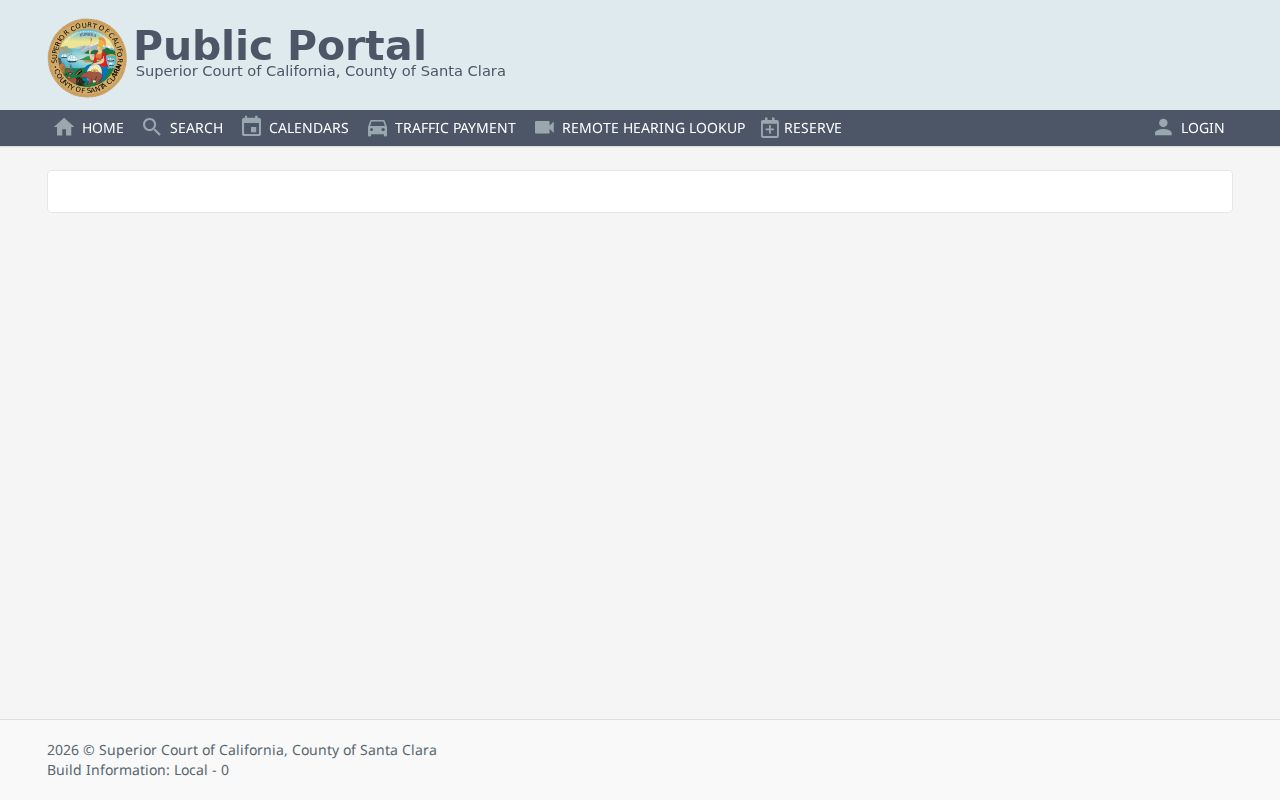
The Santa Clara Superior Court public portal keeps case information and calendars separate. Its tabs cover civil, probate, family, juvenile, traffic, and criminal calendars, including Criminal-Palo Alto. A case number is the fastest route in. Without one, search a party name with a case type and a date range. That trims a same-name pile. An address alone won't tell you the Palo Alto Courthouse's calendar role. Venue and division live inside the court record itself. A careful resident lookup in court files respects that boundary.
The accessible docket schema can return plenty. Expect case number, caption, case type, filing date, and status. Party names and roles, attorneys, register-of-actions events, hearing dates, and departments also appear. Disposition or judgment and document entries round out the list. Images vary by case type, law, account, and access setting. Sealed, adoption, juvenile, and confidential family material behaves differently from an ordinary public case. So the city directory logic of name-to-docket doesn't always apply.
The official Santa Clara Superior Court case-search portal displays the same division tabs and search controls. You would use these to narrow a candidate before pulling any docket detail.
Anchor a docket to a person carefully. Use a second identifier first. Try a parcel number, a relative, a filing date, or a party role. A courthouse counter or public terminal can expose a register. Some images never appear remotely. Federal matters follow a different map. Use the federal case locator and the Northern District of California. A county case will not hold every filing a Palo Alto party touches.
Palo Alto Voter Status Is Private
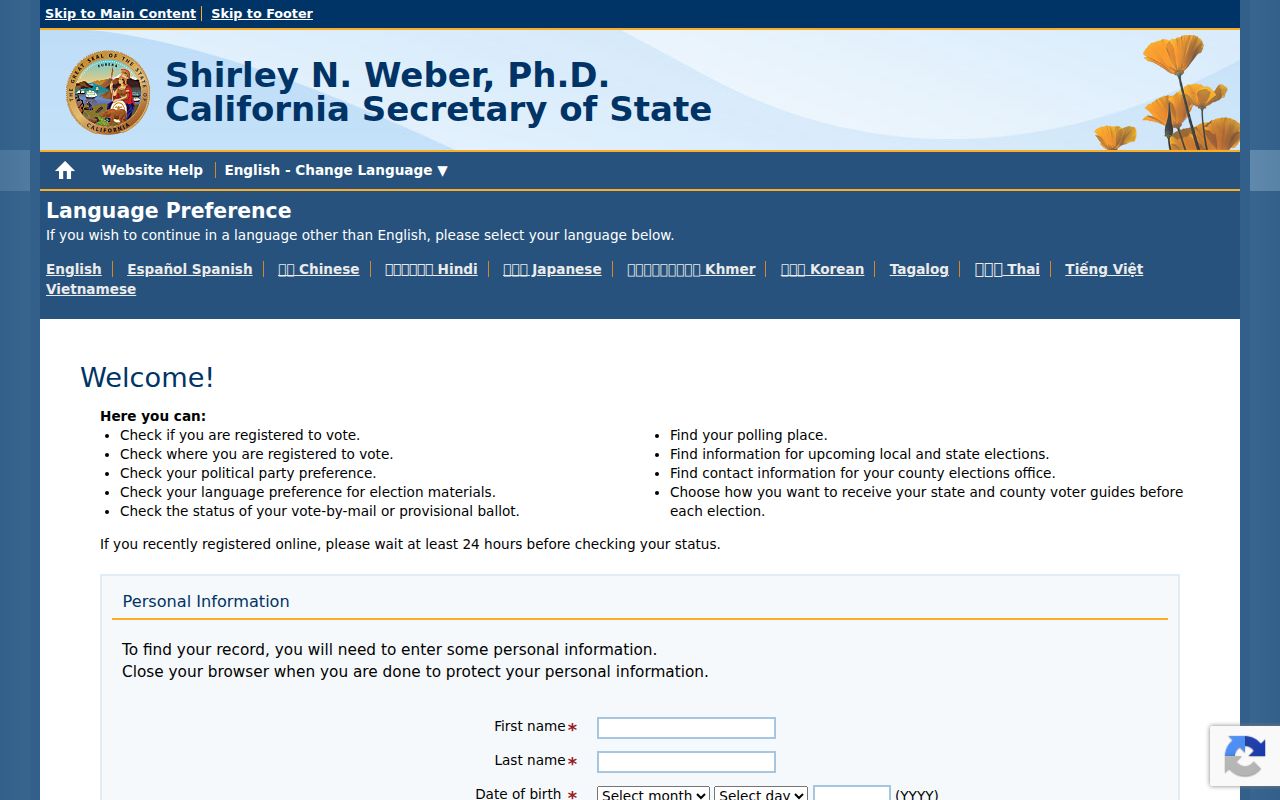
California's My Voter Status service exists for the voter, not the public. It confirms registration status, party preference, ballot status, polling place, and election information. It asks for first name, last name, date of birth, and prompted identity fields. Those fields include a California driver license or the last four digits of a Social Security number. Those inputs are for matching, not for display. A failed match is not proof that someone moved. It is a reason to call the Santa Clara County Registrar of Voters. A fuller data request goes through the Santa Clara County voter-data form.
Elections Code section 2194 and 2 CCR sections 19001-19013 make voter information conditionally available. Approved election, governmental, scholarly, journalistic, or political purposes qualify. A county request needs a purpose statement, geographic scope, requested fields, certification, and security conditions. It also covers any quoted reproduction or programming charge. It is not a public street directory. It cannot lawfully serve as a general name-to-address browser for anyone curious about Palo Alto neighbors.
The California voter-status form shows why a private self-check and an approved voter-file request differ. They are two very different paths through election records.
Registration records can hold a lot. Residence and mailing address, precinct and district, party preference, status, registration date, language, vote-by-mail flags, and participation history all appear. Confidential fields include signature, full birth date, state ID, and SSN, and Safe at Home participants get added protection that keeps them out of any voter rolls used like a residents directory.
Palo Alto Vital Copies and Search
Birth, death, marriage, and divorce evidence sits at more than one level. Santa Clara County handles local copies and local registrar work. CDPH-Vital Records maintains the statewide products. Birth records enter the state system in July 1905. A county office can be faster for a local Palo Alto event. State mail processing is listed at four to six weeks. Facts before 1905 may require county registers, newspapers, churches, libraries, or archives.
California splits certified copies into authorized and informational versions. There is no simple rule that every record opens after a set number of years. An authorized copy needs a qualifying relationship or authority plus a notarized sworn statement. An informational copy is generally available with adequate facts but cannot establish identity. Adoption originals and confidential marriages carry distinct restrictions. The 2026 state fees listed by CDPH are $31 for birth. Death is $26, marriage is $19, and a dissolution certificate is $18. County fees should be checked separately.
Mail applications use the CDPH forms. Include the event name and place, applicant relationship, delivery details, payment, and a conditional notary block. Follow the California Vital Records instructions or the county clerk route. An informal request for a private person's file goes nowhere. The Palo Alto residents directory trail for vital evidence rightly ends at these offices.
Rinconada Library Holds Palo Alto’s Older Trail
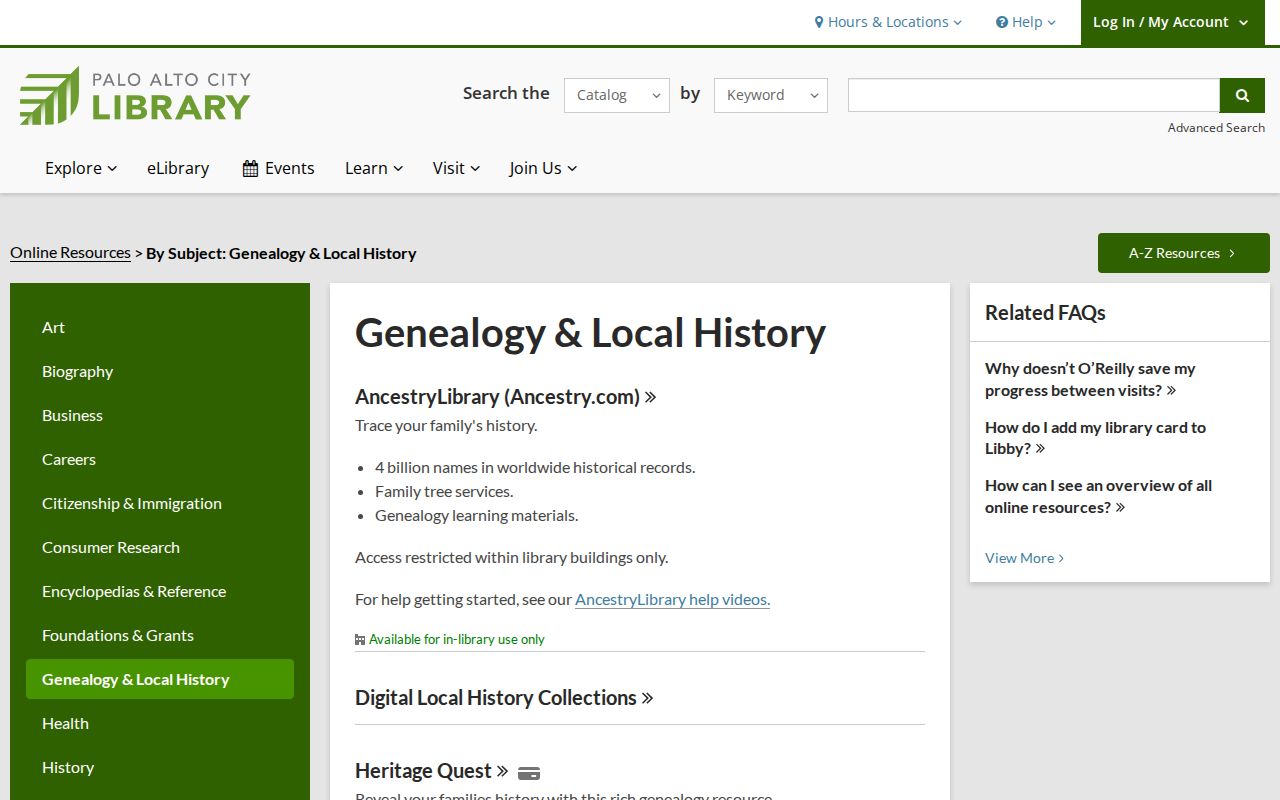
Digital records only reach so far back. The older Palo Alto trail shifts to Rinconada Library. Its Local Interest Collection and newspaper microfilm cover the physical side. Online genealogy and local-history tools add depth. An obituary index reaches from 1890 forward, and the Local News Index starts in 1989. Historical newspapers, HeritageHub, NewsBank, HeritageQuest, and Ancestry Library Edition round out the set. Access varies. Ancestry Library Edition works inside library buildings, while HeritageQuest needs a library card.
Microfilm begins with the Mayfield Enterprise in 1870. Later titles include the Palo Alto Times, Palo Alto Live Oak, Palo Alto Press, Citizen, Palo Altan, and Daily Palo Alto Times. Pair a surname with a street, spouse, church, school, club, or an obituary term to narrow results, since OCR stumbles on small type and torn pages; browse adjacent issues when a search comes up empty. The public catalog lists no single directory shelf. Ask the reference desk for a volume check.
The library's genealogy and local-history collection page lays out the databases and newspaper holdings Palo Alto researchers can draw on.
Reference help sits at (650) 329-2436 or pa.library@paloalto.gov. PAHA holds photographs, obituaries, clippings, oral histories, organizational files, and business records. For state-government records and finding aids, the California State Archives and the Online Archive of California widen the net.
Palo Alto, Stanford, East Palo Alto
A Palo Alto mailing label can hide three places. Stanford keeps Palo Alto postal ties yet sits outside the incorporated city. East Palo Alto sits in San Mateo County, a separate city entirely. ZIP 94303 mixes Palo Alto and East Palo Alto addresses daily. ZIP 94305 belongs mainly to the Stanford campus. The right custodian follows the parcel, the court venue, the event place, or the legal jurisdiction. It never follows a casual description.
Resolve the address with USPS first. Then confirm city and county through a Palo Alto parcel report or GIS. Only after that should a request move forward. Send it to the Assessor, City Clerk, county Recorder, court, or state office. The distinction matters in records work. A Palo Alto mailing city does not guarantee a municipal record. A Stanford address does not become a city household. The post office merely borrows the Palo Alto name.
Geography check. ZIP is for routing. The parcel, event jurisdiction, and record custodian decide which Palo Alto source can answer the question.
Business and License Records Near Palo Alto
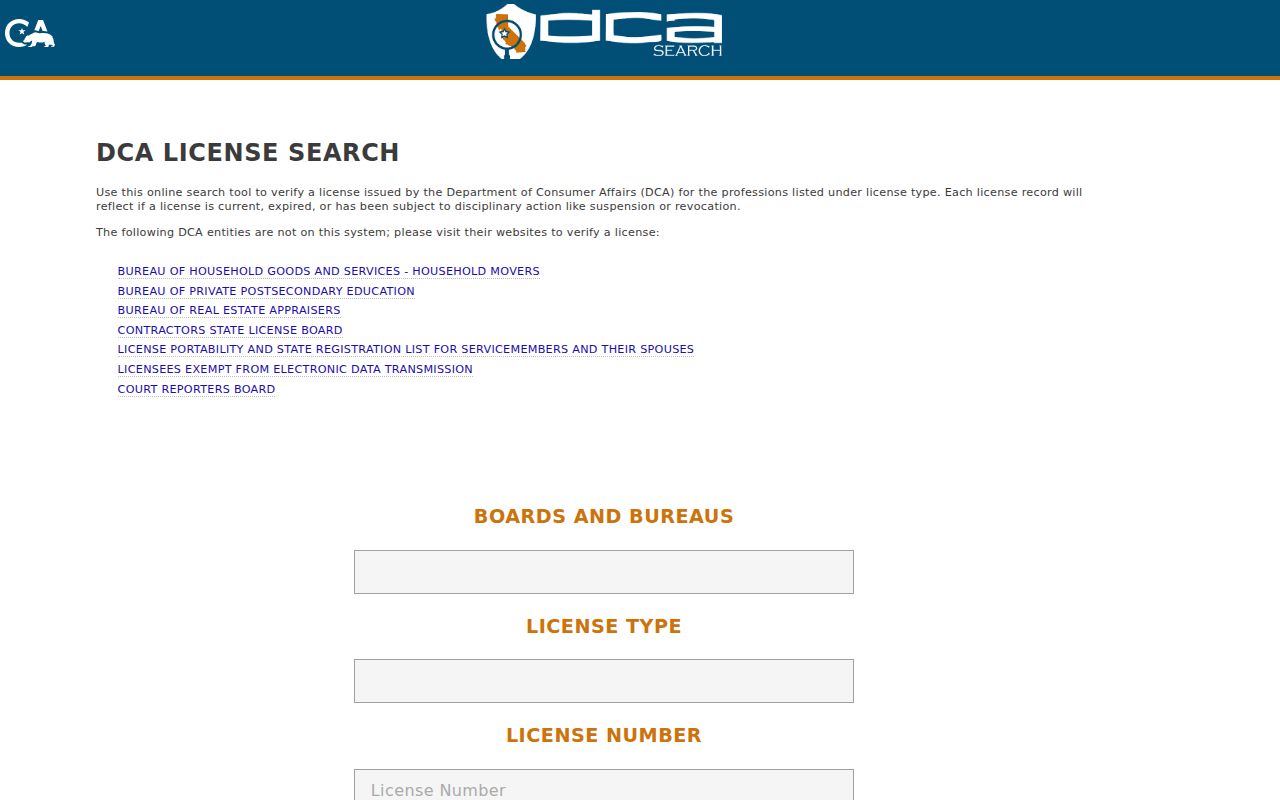
Some name searches are affiliation searches in disguise. California's bizfile Online can return plenty. Expect an entity name, number, type, status, formation or registration date, agent, filed addresses, and filing history. County fictitious-business-name filings link trade names to registrants. The Department of Consumer Affairs and its boards list a license number, type, status, issue or expiration date, and public discipline. One caution applies. A filed office or agent address is a business clue, not proof of a home address.
The official California license search helps when a name attaches to a board or professional role.
For an organization, cross-check bizfile Online against a Palo Alto permit or city record. Save the entity number and filing date. A similar-looking name alone proves little.
California unclaimed property, the State Bar, board-specific licensing portals, and local business records can each add a historical connection. Filed addresses can be old, shared, or professional. Confirm any match against a second source.
Historical Palo Alto Residents Directory Collections
Printed volumes give the Palo Alto residents directory its time depth. Documented local research leans on Palo Alto city-directory volumes from 1955 through 1976, and other Polk or city-directory runs need a shelf check at Rinconada or PAHA. Digitized scans surface through Internet Archive search and genealogy databases. No public page offers a complete verified year list. Ask before visiting. A missing year may exist somewhere.
A typical entry lists a surname with given name or initials, a spouse in parentheses, a widow notation, an occupation, a street address, a business address or telephone, and an ownership or occupancy code depending on the publisher. Alphabetical pages run from person to address. A criss-cross section flips the path, using street and house number to reach a listed occupant or business. The directory answers who was listed at an address. The deed answers title. Neither alone proves every person in a household.
Anna Zschokke's 1896 "Pioneer History" offers an earlier narrative bridge, recording births, deaths, weddings, construction, and civic work. Palo Alto grew from 37 people in early 1891 to 750 by the end of 1893, and the history traces that arc. Keep that story beside the newspaper and archive trail. It does not replace a primary record.
When a Palo Alto Lookup Must Stop
Some records stay closed in California. The parcel or court file around them may look public. Safe at Home can swap in a substitute address and shield a participant's voter registration. Sealed cases, juvenile files, and confidential marriages are off limits. Adoption records, DMV data, protected voter fields, and redacted police material are off limits too. Layering portals together does not unlock them. The California Public Records Act, Government Code section 7920.000 et seq., only asks agencies to hand over records that already exist. It does not force anyone to build a list or answer an investigative question.
Public records still serve honest purposes. Family history, civic research, reconnection, and document verification all fit within the law. The line gets crossed when a parcel clue becomes a claim about someone's private life. If a record is wrong, ask the office that keeps it to fix the source. No private directory reference can certify, amend, or remove an official record.
Responsible use. Public availability is not permission to stalk, harass, impersonate, threaten, or harm anyone. California Penal Code section 646.9 and civil-harassment protections apply to misuse, while the official custodian remains the place to verify a record.